








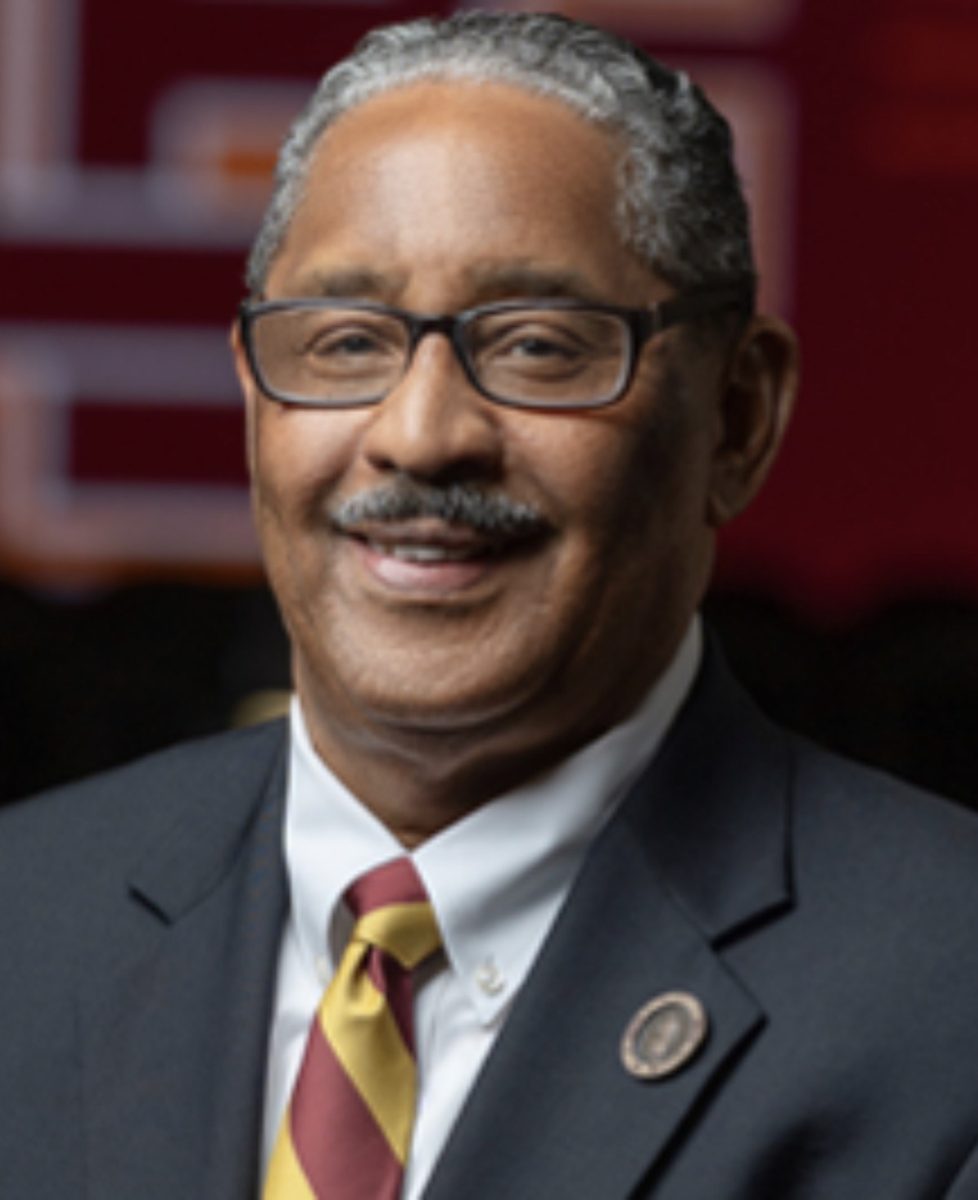
Cleveland grew up in Houston, Texas, and built his career through major companies such as Getty Oil, Halliburton, KBR, and Brown & Root. His work spanned everything from foreign tax accounting to budgeting, payroll, and managing large-scale administrative systems. During the Gulf War, he oversaw financial operations for nearly 45,000 employees stationed in Iraq—an experience that taught him how to stay steady under pressure and manage complex operations across continents. Later, he served as controller of a company responsible for payroll and HR services for thousands of workers. Those roles shaped a leadership style grounded in precision, accountability, and adaptability.
In the corporate world, Cleveland explained, leadership is driven by measurable outcomes. “If you want different results, you adjust the bonus structures,” he said. “People respond quickly because profit is the bottom line.” But when he transitioned into higher education, he learned quickly that universities operate on an entirely different rhythm. Instead of one unified mission, campuses function like dozens of small organizations under one umbrella. The chemistry department has its goals, athletics has its own budget and demands, and academic programs operate independently from student life or facilities. “That’s what makes leadership in higher education so complicated,” Cleveland said. “Everyone’s doing something important, but nobody is doing the same thing.”
Cleveland’s path to Bethune-Cookman began through his professional connection with a former university president. After working on accounting matters tied to the institution, he was invited to evaluate the university’s financial systems. The goal was simple: take an honest look at everything—budgets, spending patterns, operational gaps, historical decisions—and provide clarity. Cleveland accepted, and once he arrived on campus, he began carefully assessing the university’s financial structure.
His first ninety days were spent listening, observing, and identifying long-standing issues—many of them common among historically Black colleges and universities. Limited revenue, aging buildings, and years of deferred maintenance all created heavy financial strain. Even as he got a quick grasp of the immediate problems, Cleveland said it took almost a year to truly understand the institution’s inner workings and the historical factors shaping its challenges.
Despite this, Cleveland has pushed forward with major improvements. Under his leadership, the university has invested millions into campus repairs, academic facilities, and operational upgrades. Among those accomplishments is the construction of Bethune-Cookman’s first on-campus football field in more than 120 years—an achievement that reflects both financial strategy and long-term planning.
As CFO, Cleveland’s work centers on stability, structure, and sustainability. He emphasizes the importance of consistent audits, strong budgeting practices, and long-term financial planning. One of his biggest goals is to significantly grow the university’s endowment. “I want to leave this university with the largest endowment it has ever had,” he said. For him, strengthening the endowment isn’t just a financial milestone—it’s a commitment to future students and the long-term survival of the institution.
Even after decades of corporate success, Cleveland sees his role at Bethune-Cookman as one of the most meaningful chapters in his career. Higher education may not operate like the businesses he once led, but the purpose behind the work—the students, the mission, the legacy—is what drives him now. In helping stabilize and rebuild the university’s financial health, he’s not just managing numbers; he’s shaping the foundation for what Bethune-Cookman can become in the years ahead.