

Last year I started collecting American Girl dolls.
I know that sounds strange, especially because I am in college but having these dolls make me happy.
That’s not the only reason why I adore them, however. They are educational. They were created by a former teacher who wanted little girls to have fun while learning about the history of their country. With a background like that, it would be easy to assume that black history would be lost in that objective— especially when you see the prices of these dolls.
But that would be an inaccurate assumption.
American Girl has existed for 40 years now and during that time the creator developed four black characters. Addy, Cecile, Melody, and Claudie.
These characters exist as introductions to history. You are lured in by the adorable doll with her clothes, accessories, and playsets. Then they show you the reality of those time periods with their stories.
Not our stories.
Through fiction we connect to our very real history that includes legacies such as
Ruby Bridges, the first African American child to attend a formerly white only school in 1960.
Claudette Colvin, whom at the age of 15 was arrested for refusing to give up her seat to a white woman on a segregated bus in 1955
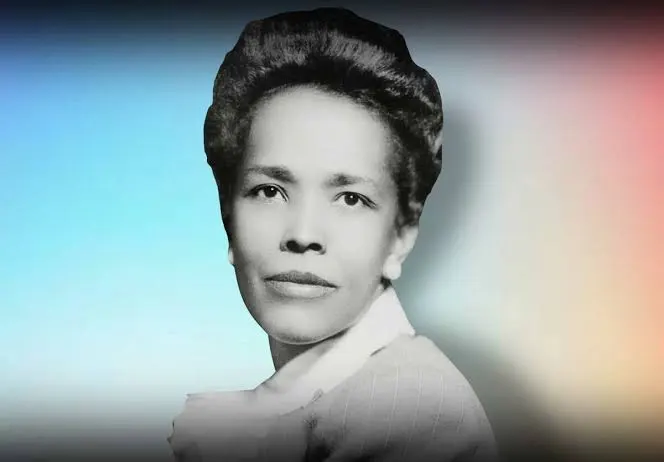
And, of course, the honorable Dr. Mary McLeod Bethune, who with just five little girls, $1.50, and unwavering faith in God, founded this very institution we stand in today.
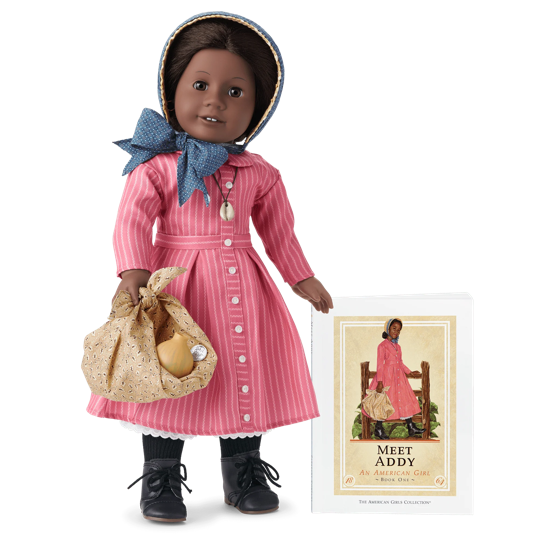
Addy Walker was the first black doll ever released in the lineup. According to her story, she was born into slavery in1864. This is where many write Addy off.
But Addy is so much more than that. One day, Addy becomes distracted while working picking worms off tobacco plants. She misses quite a few and the overseer forces her to eat worms. The reason why she was so distracted? Her brother and father were sold to another plantation. She didn’t know if she’d ever see them again. Or if she would be next. But Addy escaped the shackles of slavery with her mother, just like her father always wanted for his children.
She learns to read and write, she donates to her local church so they can help other newly free people. In the end, Addy’s family reunites.
Addy was a very courageous young girl, there are many examples of this. She chased down a thief and even saved a man’s life. She lived in Philadelphia after getting her freedom. Hearing that, I can’t help but imagine a child learning that Harriet Tubman also gained her freedom in Philadelphia. That same child would go on to learn that not only was she a very courageous woman, not only because she was a conductor in the underground railroad, but also because she was the first American woman to lead an armed raid into enemy territory. Or another child just reading Addy’s books and learning more about The Underground Railroad.
American Girl’s historical line spans over 200 years. So, let’s take a look at the girl who represents the ’60s, a crucial time period for Black Americans and the rights we had been denied up to that point. Her name is Melody Ellison and she appeared in from 1964. She spends a portion of her diary worried. She was chosen to sing a solo in the children’s choir at church. Coming from a music loving family, she just doesn’t know what she’s going to choose. While she’s deciding, she documents everything else happening in her life.
She, for example, about closing her account with the bank that refused to give her sister a summer job because she was black.
She talks about her love for Motown, even idolizing groups such as The Marvelettes. She even gets to take a tour through the Hitsville USA, which is now the Motown Museum.
Melody and her family even attended The Walk to Freedom where Dr. King gave an earlier version of his iconic “I Have a Dream” speech. This is how Melody picks her song for her solo: Lift Every Voice and Sing. (The Black National Anthem).
The year 1964 wasn’t that long ago and things that happened to Melody and her family are still happening today.
She writes:
“I started crying. No one ever shouted at me like that before, ever! They thought we were stealing! I wanted to tell somebody, like Poppa. Dwayne said it wouldn’t help. He said this wasn’t the first time something like this has happened to him! Then he said it also won’t be the last. Is this going to happen to me again? Will I be accused of shoplifting because I’m Black?” (Page 42-43 of Melody: My Diary)
How many people today have had an employee hovering over them as they shopped or breathing down their necks at self-checkout?
These characters can be a tool to educate young black girls and boys about where they came from. Especially now, when Black History is being axed out of curriculums.
After all, isn’t that why we have a Black History Month? Not only to celebrate those who came before us, but to educate ourselves and the generations that come after.
We still have barriers to break.
Musically.
Academically.
Socially.
And especially, politically.